How Minor Water Pooling and Sagging Can Quietly Trigger Total Flat Roof Failure
July 9, 2026
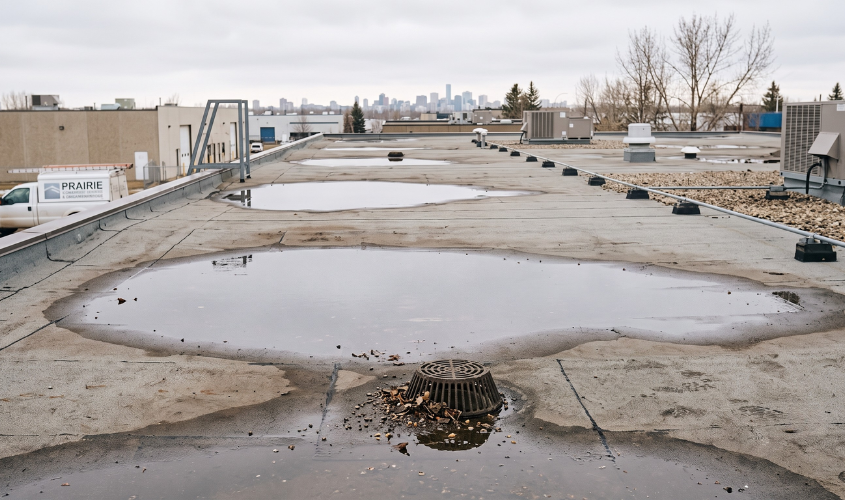
Most commercial flat roofs do not look dangerous before they fail.
That is what makes them deceptive.
The leak gets mentioned casually during maintenance meetings. The building still opens every morning. Meanwhile, water may already be sitting in the same low section of roof after every storm, quietly adding weight into a structure that was never designed to hold it permanently.
After major snowstorms in Canada, engineers and inspectors usually start repeating the same warnings again. Sagging ceiling lines. Sticking doors. Persistent ponding water on flat roofs. The problem is that by the time those signs become obvious, the structure underneath has often been under stress for much longer than anyone realized.
That is why ignoring early warning signs can quickly turn manageable flat roof repair services into major structural reconstruction work later.
Why Flat Roofs Become Vulnerable to Sagging
Flat roofing systems behave very differently than most people think.
From the ground, commercial roofs often look almost level. But they are actually designed with subtle drainage paths that constantly move water toward drains and scuppers before it has time to settle into low areas.
The problem starts when part of that system stops draining the way it should.
Water begins sitting in the same spot after every storm. Then it sits there again after the next one.
And water gets heavy fast.
Most property owners never realize how much weight may already be sitting on the roof above them. Even shallow ponding across a large commercial roof can quietly add thousands of pounds of pressure into the same weakened section day after day. In commercial roofing, standing water that remains longer than 48 hours is usually treated as an early warning sign that drainage performance may already be compromised.
Then Edmonton winter arrives.
Snow starts building on top of the ponding areas. Ice forms in the low spots. Everything freezes, expands, softens, thaws, and freezes again. That cycle alone is hard on commercial roofing systems. Once sagging starts, it gets much worse.
Canadian building researchers have spent years studying how repeated moisture exposure and freeze thaw cycling accelerate deterioration inside roofing assemblies and structural materials.
The dangerous part is how gradual the process feels at first.
A low section dips slightly under the extra weight. That dip holds more water during the next storm. More water creates more stress. The sag deepens. Then the next snowfall adds even more load into the exact same area.
Most building owners never notice it happening in real time because nothing changes overnight.
But underneath the membrane, the roof structure may already be struggling long before the leak becomes obvious indoors.
How Minor Flat Roof Damage Quietly Escalates
A lot of major flat roof failures start from surprisingly small issues.
Sometimes it is a seam beginning to separate. Sometimes the membrane has simply started aging after years of UV exposure and thermal movement. Other times, drainage problems were quietly there from the beginning.
Either way, once moisture gets underneath the membrane, the situation changes quickly.
The insulation starts absorbing water.
Moisture gets trapped inside the roofing system.
And from the ground, the roof may still look completely normal while the layers underneath slowly begin deteriorating.
That is usually when the hidden structural damage starts becoming expensive.
Wood decking can begin rotting beneath the membrane. Steel decks start corroding. Fasteners weaken.
Then another Edmonton winter adds more snow load, more ice, and more pressure into the same compromised section.
Eventually the roof starts showing subtle signs that something underneath is no longer stable.
Ponding gets deeper.
Ceiling areas begin sagging slightly.
Doors suddenly start sticking.
At that point, the building is no longer reacting to a simple leak.
It may already be responding to structural stress overhead.
Warning Signs Commercial Property Owners Should Never Ignore
By the time a flat roof problem becomes obvious from inside the building, the damage underneath is often much further along than property owners expect.
That is why small changes around the building matter.
Persistent Ponding Water
If water is still sitting on the roof more than 48 hours after rainfall, the drainage system may no longer be performing properly. Repeated ponding in the same area often means the roof structure underneath has already started shifting or sagging.
Interior Ceiling Sagging
Slight bowing or uneven ceiling lines inside the building should never be ignored. In commercial buildings, subtle sagging is sometimes the first visible sign that structural stress is developing overhead.
Bubbling or Separating Roofing Membranes
Blistering, cracking, seam separation, or bubbling usually means moisture has already entered parts of the roofing system.
And by the time those signs appear on the surface, the damage underneath is often larger than expected.
Doors or Windows Suddenly Sticking
This catches many property owners off guard.
When sections of a commercial structure begin shifting under stress, small alignment changes sometimes appear first around doors, windows, and interior framing.
Deepening Low Spots on the Roof
If ponding areas seem worse after every season, the roof may already be experiencing progressive deflection where sagging areas continue trapping more weight over time.
Why Early Flat Roof Repair Usually Saves Thousands
Most catastrophic commercial roof failures are preventable.
That is what makes delayed repairs so frustrating in hindsight.
A targeted flat roof repair completed early may only involve localized membrane replacement, drainage correction, reinforcement work, or moisture remediation before the structural system becomes compromised.
Compared to a full emergency replacement, that is a much more controlled situation.
Once moisture spreads deeper into the roofing assembly, costs rise quickly. Structural repairs become more invasive. Interior damage spreads into insulation cavities, electrical systems, tenant areas, equipment spaces, and inventory storage.
For commercial buildings, operational downtime often becomes just as expensive as the roofing work itself.
And in Alberta’s climate, roofing systems already deal with enough seasonal stress without trapped moisture sitting inside the structure year after year.
That is why proactive inspections matter.
Especially for older flat roofing systems that have already gone through multiple freeze thaw cycles and heavy snow seasons.
Protect Your Building Before Small Roofing Problems Turn Structural
By the time a commercial flat roof starts visibly sagging, the problem underneath is often much larger than the original leak that caused it.
That is why early inspections matter.
At J & D Independent Roofing, a lot of commercial repair calls across Edmonton start the same way. A small ceiling stain. Ponding that seems slightly worse than last season. A section of roof nobody thought was serious yet.
Sometimes it is manageable.
Sometimes the structure underneath has already been holding excess weight for much longer than anyone realized.
If your building is showing signs of persistent ponding, sagging, membrane deterioration, or interior shifting, contact us for a professional flat roof assessment before the next major storm system puts even more stress on the structure.