How to Future-Proof Your Commercial Roof in Edmonton for the Next 30 Years
June 29, 2026
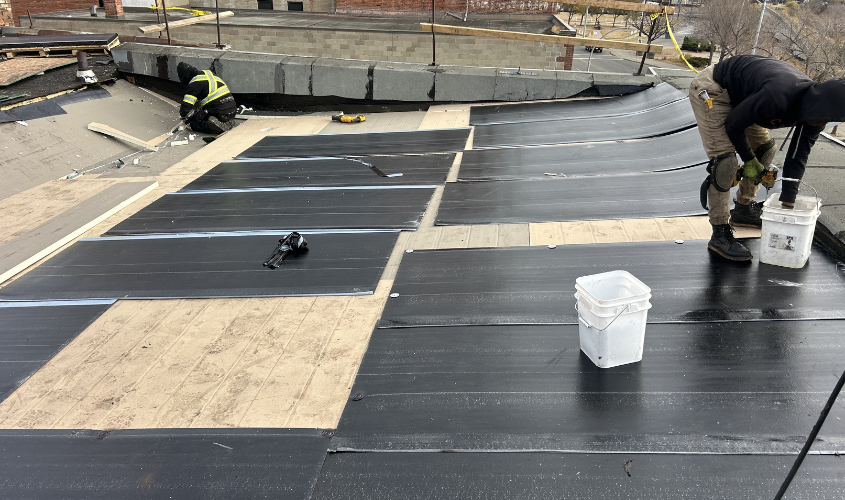
A commercial roof should not fail early. Yet many do.
Material choice plays a major role, but it is not enough on its own. Even the best systems fail when design, installation, or maintenance are not handled correctly.
In Edmonton, roofing systems face constant stress. Freeze thaw cycles, snow buildup, and seasonal moisture test every layer of the roof. What performs well on paper can still break down early if key details are missed.
Future-proofing takes a broader view. It is about making the right decisions at every stage, from system selection to long-term care.
Quick Summary: How to Future-Proof Your Commercial Roof
Future-proofing a commercial roof for the next 30 years comes down to three critical factors:
- The roofing system you choose
- The quality of the installation
- How consistently the roof is maintained
Most roofs do not fail because they are old. They fail because one of these areas was handled incorrectly.
The difference between a roof that lasts 15 years and one that reaches 30 often comes down to small decisions made early.
But here’s where it gets important.
Even when these three areas are considered, many buildings still face early issues. The reason is not obvious at first, but it shows up over time.
Why Long-Term Roofing Strategies Fail (Even When They Look Right)
On paper, many commercial roofs look solid. Good materials. Proper installation. Standard maintenance.
Yet problems still appear earlier than expected.
This usually happens because:
- The system was not matched to the building’s real use
- Drainage was not properly planned
- Maintenance was reactive instead of consistent
These are not major mistakes. But over time, they compound.
And once they do, the cost of fixing them is far higher than preventing them.
This is why future-proofing is not a single decision. It is a series of aligned choices that work together over time.
What You Need to Get Right From the Start
Before looking at systems or materials, one shift needs to happen.
A commercial roof should not be treated as a short-term expense. It should be treated as a long-term asset.
That means:
- Planning beyond installation
- Thinking in decades, not years
- Prioritizing performance over shortcuts
If you are considering a professional commercial roofing system in Edmonton, the goal is not just to install a roof.
It is to install a system that will still perform when the building itself has aged.
Here’s how to build it for long-term performance.
Step 1: Choose the Right Roofing System
Every building performs differently. A warehouse does not have the same demands as an office or retail space.
So the first decision matters.
The roofing system must match:
- Building size and structure
- How the space is used
- Exposure to weather conditions
In Edmonton, SBS and built-up roofing systems are widely used. When installed properly, they offer strong, reliable performance over time.
But here’s the key.
Choosing based on price alone often leads to higher costs later. A well-matched system reduces repairs and extends the life of your roof.
Step 2: Prioritize Professional Installation
Once the right system is selected, installation becomes the next critical step.
Even high-quality materials fail when installation is done poorly.
This is where most problems begin.
Installation should be treated as a precision process, where every layer, joint, and transition is handled with long-term performance in mind.
This is also where industry standards matter.
Certified commercial roofing crews follow established guidelines, safety protocols, and manufacturer specifications, including requirements outlined in the National Building Code of Canada, to ensure consistent, reliable results.
Key details include:
- Proper sealing of seams
- Accurate flashing installation
- Correct slope for drainage
These may seem small, but they define how the roof performs over time.
When these details are handled correctly, the result is simple.
The roof performs as intended, for as long as it should.
Step 3: Follow a Consistent Maintenance Plan
A well-installed roof still needs consistent care to perform over time.
This is what separates short-term performance from long-term reliability.
A proactive maintenance plan should include:
- Seasonal inspections
- Drain and debris clearing
- Surface checks for early damage
In commercial environments, small issues can develop quickly. Regular maintenance keeps them controlled before they escalate.
Guidance from the National Research Council Canada supports regular inspection and upkeep as part of maintaining long-term building performance.
Over time, this is what protects the system and stabilizes costs.
If your roof is already in place, investing in commercial roof maintenance services in Edmonton helps ensure it continues to perform as intended.
But maintenance alone is not enough.
Step 4: Address Problems Early
No roofing system is completely immune to wear.
What matters is how early issues are identified and addressed.
Most failures do not happen suddenly. They develop gradually, with early signs that are often easy to miss.
Early signs to watch for:
- Ponding water
- Surface cracks
- Blistering or separation
These appear before serious damage occurs.
And this is where long-term performance is either protected or compromised.
Catching issues early keeps repairs simple and controlled. Delays increase risk. What starts as a minor repair can lead to insulation damage, structural concerns, and higher costs.
In a 30-year roofing strategy, timing is not a detail. It is a deciding factor.
Once early issues are under control, the focus shifts to extending system performance.
Step 5: Use Protective Solutions to Extend Roof Life
As the roof moves through its lifecycle, additional protection can help extend its performance.
Protective coatings act as a barrier against weather, wear, and environmental exposure.
They can:
- Reduce moisture impact
- Improve resistance to temperature changes
- Extend membrane life
This is not about fixing problems. It is about delaying them.
Coatings are most effective when the roof is still structurally sound. Applied at the right time, they can significantly extend the usable life of the system.
But even with protection in place, long-term performance still depends on planning ahead.
Step 6: Plan for Lifecycle and Budgeting
At this stage, the approach needs to become more intentional.
A commercial roof should be managed as a long-term asset rather than a reactive expense. The focus shifts from fixing problems to planning performance.
This is where strategy becomes clear.
A lifecycle approach typically includes:
- Scheduled inspections
- Predictable maintenance costs
- Long-term replacement planning
Together, these elements create control. Instead of responding to failures, decisions are made ahead of time with performance in mind.
That is what defines a true 30-year roofing strategy.
When maintenance, early action, and long-term planning work in sync, the outcome goes beyond extended lifespan.
The roof performs consistently, year after year, with fewer surprises and better cost control.
Why Edmonton Businesses Need a Long-Term Roofing Strategy
Edmonton’s climate puts constant pressure on roofing systems.
Seasonal shifts can expose weaknesses faster than expected.
Without a long-term plan:
- Repairs become frequent
- Costs increase over time
- Downtime risks grow
A future-proofed roof avoids these issues.
It creates stability, protects assets, and supports operations.
Frequently Asked Questions
How long does a commercial roof last?
Most commercial roofs last between 20 and 30 years. Lifespan depends on system type, installation quality, and maintenance.
How often should a commercial roof be inspected?
At least twice a year. Additional inspections are recommended after major weather events.
What is the best commercial roofing system for longevity?
There is no single answer. SBS and built-up systems are strong options, but the right choice depends on the building.
When should a commercial roof be replaced?
When repairs become frequent or when structural performance begins to decline.
Conclusion
A commercial roof plays a critical role in building performance.
And long-term performance is never accidental. It comes from the right system, proper installation, and consistent care.
When these elements work together, a roof can perform reliably for decades.
About J & D Independent Roofing
J & D Independent Roofing delivers commercial and industrial roofing solutions across Edmonton and Western Canada, with a focus on long-term performance.
With over 30 years of experience and more than 3,000 completed projects, the work is guided by proven systems, certified crews, and consistent installation standards.
From installation to maintenance, every system is built to perform reliably over time.
If you are planning a commercial roofing project, contact us to discuss your requirements.