Why Cheap Flat Roofs Crack in the Cold: The Winter-Proof Benefits of SBS Torch-On Roofing
July 16, 2026
Every spring, some property owners across Edmonton end up dealing with the same flat roof leak they thought was solved the year before The snow melts. Temperatures climb for a few days. Then the ceiling stain quietly comes back in the exact same spot again. At first, most people assume the previous repair simply did not hold properly.
But a lot of flat roofs in Alberta are already struggling long before the leak finally shows itself indoors. Years of freeze-thaw stress, trapped moisture, and temperature swings slowly wear cheaper roofing systems down until the seams eventually start opening back up again.
That is usually when property owners stop looking for another temporary patch and start asking what kind of roofing system actually survives here long term.
For many commercial buildings, that conversation eventually leads to SBS torch-on roofing systems.
Why Some Flat Roofs Start Breaking Down Faster Than Others
What catches a lot of property owners off guard is how long a flat roof can struggle before it finally starts leaking indoors. By the time water starts showing up inside the building, the roofing system itself has often been under stress for years already.
That includes many aging EPDM roofs, thinner single-ply systems, older rolled roofing assemblies, and lower-grade flat roofing materials that slowly lose flexibility after enough Alberta winters.The membrane ages. UV exposure gradually dries the material out. After years of freeze-thaw stress, cheaper roofing systems often start becoming brittle instead of flexible.
That is usually when small seam gaps begin opening around the same stress points every winter.And once moisture starts working underneath the system, the damage tends to spread much faster than people expect.At first, it may only look like a recurring leak that keeps returning every spring.Then another patch gets added the following season. Then the same brown ceiling stain quietly starts showing up again after the next freeze-thaw cycle.
In Canada, roofing and building envelope researchers have spent years studying how trapped moisture and repeated freeze-thaw cycles slowly break roofing systems down from the inside out. A lot of flat roofs do not suddenly fail one winter. Usually the roof has been warning the building for quite a while first.
Why More Property Owners Eventually Move Toward SBS Roofing
After enough recurring leaks and seasonal repairs, this is usually the point where many building owners start looking at SBS systems differently.
Most property owners do not really care what SBS stands for chemically.
What they care about is whether the roof keeps leaking every winter.
The biggest difference with SBS roofing is flexibility.
Cheaper roofing systems eventually start struggling with movement once temperatures begin swinging aggressively during Alberta winters. The membrane stiffens, seams weaken, and sections that once stayed sealed through winter slowly start reopening during freeze-thaw season.
SBS systems are designed differently.
The material behaves more like a flexible rubberized membrane instead of a brittle surface that starts cracking under stress.
That matters more than many people realize in Western Canada where roofing systems constantly deal with:
- freeze-thaw movement
- snow load pressure
- expanding ice
- rooftop servicing traffic
- sudden temperature swings
A roofing system that can keep flexing through those conditions usually lasts much longer than one constantly fighting against them.
Why the Seams Matter So Much on Flat Roofs
A lot of recurring flat roof leaks do not start in the middle of the roof.
They usually start where sections join together.
That is why seams become such a big deal during Alberta winters.
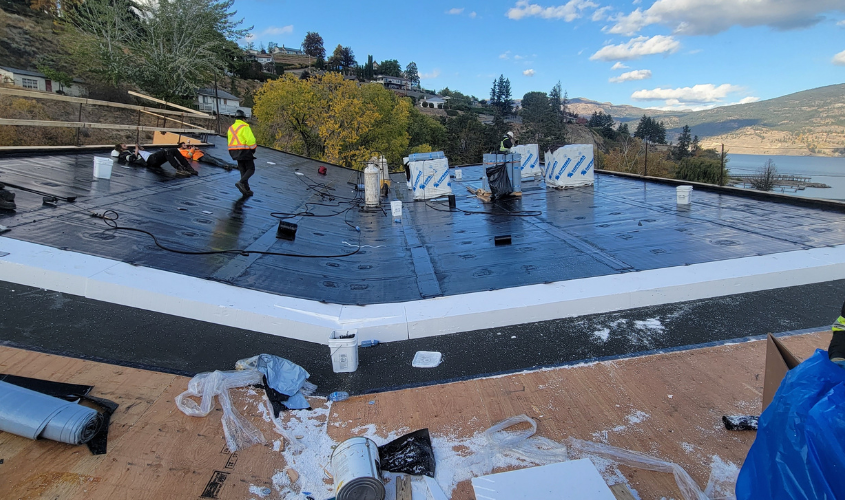
With SBS torch-on roofing, installers use controlled heat to fuse the membrane layers together during installation. Instead of relying mostly on glued joints that slowly separate over time, the seams are fused into one continuous waterproof surface where water has far fewer opportunities to work its way underneath.
That difference becomes important once snow, moisture, and freeze-thaw stress start testing the roof season after season.
That is one reason SBS systems have become so widely trusted across colder Canadian climates.
What Property Owners Usually Notice After Switching to SBS
Most people do not replace a flat roof because they suddenly became interested in roofing systems.
Usually they are just tired of dealing with the same problem every year.
The Roof Stops Becoming a Seasonal Problem
For many property owners, the biggest difference is consistency.
Instead of watching the same ceiling stain slowly reappear every spring, the roof finally starts staying quiet through winter.
Better Performance During Alberta Winters
Flat roofs in Edmonton go through a lot over time.
Snow accumulation. Ice buildup around drains. Hail exposure. Maintenance traffic. Sudden temperature swings that put constant stress on seams and low areas.
SBS systems are built to handle that kind of long-term pressure much better than many lower-grade flat roofing materials.
Longer Lifespan
A properly installed SBS torch-on system can perform for decades when maintained correctly.
That matters because many cheaper flat roofs start showing serious deterioration much earlier once repeated winters begin wearing the system down.
Easier Long-Term Repairs
If localized damage ever happens, certified crews can usually heat-weld targeted repair sections directly into the existing system without replacing the entire roof.
That makes future maintenance much more manageable.
The Torch-On Safety Question Most Property Owners Quietly Think About
The word “torch” understandably makes some people nervous.
And honestly, it should.
Torch-on roofing is not something inexperienced crews should ever treat casually.
Proper SBS installation involves controlled hot-work procedures, trained installers, fire prevention protocols, safety monitoring, and full insurance coverage throughout the project.
That is why the contractor matters just as much as the roofing system itself.
At J & D Independent Roofing, SBS torch-on projects are completed by fully insured, COR safety-certified crews trained to follow strict Canadian hot-work safety procedures from start to finish.
For most property owners, that peace of mind matters just as much as the roof performance itself.
Eventually the “Cheap Roof” Stops Feeling Cheap
A lower roofing price can feel like the practical decision at first.
Then the repair cycle starts.
Another patch after spring melt. Interior ceiling damage. Wet insulation. Emergency service calls after another freeze-thaw cycle. The same ceiling stain showing up again in the same section.
Eventually, many property owners realize they are not really saving money anymore.
They are just paying for the same roof repeatedly in smaller pieces.
That is usually when the conversation changes from:
“What is the cheapest option?”
to:
“What roofing system actually survives Alberta winters properly?”
That is one reason SBS torch-on roofing continues to stand out across Western Canada.
Stop Repairing the Same Flat Roof Problem Every Spring
Recurring leaks are usually a sign that the roofing system itself is no longer handling Alberta’s climate properly.
At J & D Independent Roofing, SBS torch-on roofing systems are installed with Edmonton freeze-thaw conditions, snow loads, and long winters in mind from the start.
If your flat roof keeps leaking after every winter, it may be time to stop patching the same problem and start looking at a roofing system designed to handle Western Canadian conditions long term.
Contact us today to schedule an inspection and find out whether SBS torch-on roofing is the right fit for your building.