Combating Flat Roof Drainage Challenges Through Professional Torch On Roofing
August 6, 2026
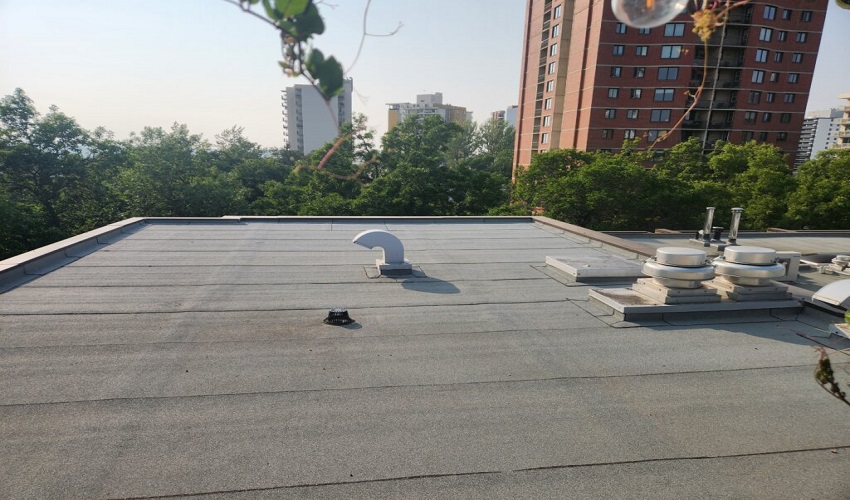
Combating Flat Roof Drainage Challenges Through Professional Torch On Roofing
For property owners across Canada, the flat roof presents a persistent paradox. It offers modern architectural appeal and maximises usable interior space, yet its minimal slope creates inherent vulnerabilities regarding water evacuation. When drainage systems falter, pooled water accelerates membrane degradation, compromises structural integrity, and cultivates interior leaks. Addressing these challenges requires a specialised approach. For J & D Independent Roofing, the preferred solution for enduring performance is professional torch on roofing, a system uniquely suited to withstand our nation’s demanding freeze-thaw cycles and heavy precipitation events.
Unlike simple patching or low-grade sealants, a professionally installed torch-on membrane delivers seamless, monolithic waterproofing. This method actively combats the three primary enemies of flat roofs, ponding water, membrane seam failure, and thermal stress.
Understanding the Drainage Dilemma on Flat Roofs
Flat roofs are rarely perfectly level, they incorporate a slight pitch toward drains, scuppers, or internal gutters. However, building settlement, improper original construction, or debris accumulation frequently disrupts this intended flow. Water finds the lowest point, and if that point lacks an adequate drain, a pond forms. Even a seemingly shallow puddle exerts significant hydrostatic pressure on the underlying membrane.
Over time, standing water accelerates UV degradation and penetrates microscopic cracks during freeze-thaw events. When water freezes, it expands by approximately nine per cent, prying apart membrane layers. According to guidelines from the National Research Council of Canada, effective flat roof design must account for both immediate drainage and long-term resistance to standing moisture. Torch-on systems address this by creating a fully adhered, heat-fused layer that eliminates the weak points where water typically intrudes.
How Torch On Roofing Resolves Drainage Failures
Torch on roofing, also known as modified bitumen torch application, involves heating sheets of reinforced asphalt-based membrane with a propane torch. The heat activates the modified bitumen, allowing the material to bond uniformly to the substrate and to overlapping membrane sheets. This process produces a continuous, seamless barrier substantially thicker than standard alternatives.
For drainage challenges specifically, torch on roofing offers three distinct advantages:
- Heat-fused seams possess superior tensile strength compared to cold-adhered systems, resisting separation when water pools and exerts lateral force
- The membrane’s elasticity accommodates minor structural movements without cracking, preserving the integrity of the drainage slope
- Professional installers can integrate tapered insulation systems beneath the torch-on membrane, creating positive drainage pathways that guide water toward existing outlets
Climate-Specific Advantages for Canadian Properties
Canadian flat roofs endure extreme thermal cycling. Summer surface temperatures can exceed 70 degrees Celsius, while winter brings sustained sub-zero conditions. Torch on roofing membranes are engineered with SBS (Styrene-Butadiene-Styrene) modifiers that retain flexibility in cold weather. An SBS-modified torch-on membrane can remain pliable at temperatures as low as -30 degrees Celsius, preventing the brittle cracking that plagues lesser materials.
Key climate-specific benefits include:
- Built-in polyester reinforcement provides puncture resistance against ice dam formation and falling debris
- The monolithic surface eliminates seam voids where freeze-thaw separation typically begins
- Resistance to mechanical abrasion allows safe snow removal near drains without membrane damage
Health Canada’s information on indoor air quality notes that persistent moisture intrusion from roofing failures contributes to mould proliferation. By selecting a torch-on system with proper drainage integration, property owners directly reduce the risk of hidden fungal growth.
The J & D Independent Roofing Difference
Not all torch-on applications deliver equal results. The technique demands rigorous safety protocols, precise temperature control, and a thorough understanding of substrate preparation. J & D Independent Roofing follows a methodical process designed for Canadian building codes and manufacturer specifications.
The process begins with a comprehensive drainage assessment. Our team identifies low spots, measures existing slopes, and evaluates drain condition. Where ponding is chronic, we install tapered polyiso insulation panels that establish a minimum slope of one-quarter inch per linear foot toward drains. This step is critical, applying membrane over an unmodified ponding zone merely delays failure.
Next, we apply a high-quality base sheet mechanically fastened to the substrate. The torch-on cap sheet is then unrolled and heated uniformly. Our technicians maintain precise travel speeds to achieve proper bitumen flow without carbonising the material. Each overlap receives a secondary heat pass, and all penetrations, vent pipes, skylights, and drain flanges, receive multiple plies of reinforced flashing.
Financial Implications of Neglecting Drainage
Delaying professional intervention on a poorly draining flat roof carries tangible financial consequences. Minor ponding that persists for forty-eight hours or more after rainfall accelerates membrane aging by approximately fifty per cent. A membrane designed for a twenty-year service life may fail within eight to ten years under chronic standing water conditions.
Leak repairs, interior ceiling restoration, mould remediation, and insulation replacement quickly accumulate costs that far exceed a proactive torch-on roofing installation. Furthermore, some Canadian commercial insurance policies now exclude water damage originating from neglected flat roof maintenance. For municipalities and commercial property managers, compliance with the National Building Code of Canada’s requirements for roof drainage is non-negotiable.
Conclusion
Flat roof drainage challenges are not merely inconveniences, they are progressive threats to building value, occupant health, and financial stability. Combating these threats requires a roofing system engineered for seam strength, cold-temperature flexibility, and seamless waterproofing. Professional torch on roofing, executed by experienced contractors like J & D Independent Roofing, delivers these attributes while actively correcting underlying drainage deficiencies.
Whether you manage a commercial strip mall, an apartment complex, or a residential modern home with a flat roof section, investing in a professionally installed torch-on membrane is a decisive step toward eliminating ponding and preventing interior leaks. Contact us to schedule a comprehensive drainage assessment and learn how our torch-on solutions protect your property through every season.