Defending Industrial Infrastructure Through Reliable Roof Replacement in Edmonton
July 23, 2026
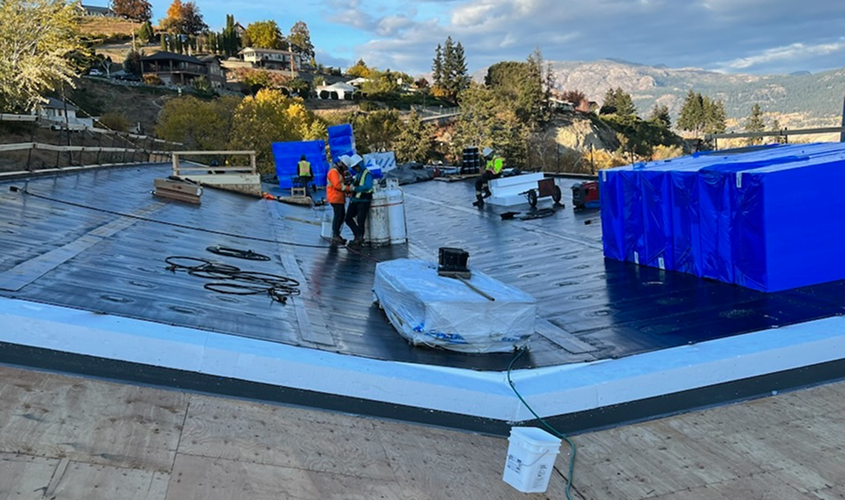
For facility managers and plant operators across Alberta, the industrial roof is far more than a simple covering. It is a critical asset layer that defends automated machinery, raw material inventories, and finished goods from our unforgiving prairie climate. When a commercial roofing system reaches the end of its serviceable life, deferred maintenance rapidly escalates into catastrophic structural decay. Investing in professional roof replacement in Edmonton is not a capital expense to avoid, but a strategic intervention to preserve operational continuity.
At J & D Independent Roofing, we treat industrial roof assemblies as integrated engineering systems. Patchwork repairs on aged built-up roofs or deteriorating single-ply membranes merely postpone the inevitable. A complete roof replacement eliminates hidden moisture migration, restores thermal efficiency, and re-establishes the building envelope’s resistance against high winds, freeze-thaw cycles, and heavy snow loads unique to central Alberta.
The Hidden Deterioration Beneath Aged Industrial Roofs
Many commercial property owners assume that the absence of active dripping indicates a functional roof. This assumption is dangerously false. Beneath the weathered surface of an aging industrial roof, trapped moisture degrades insulation R-values, corrodes steel decking, and fosters fungal colonisation within vapour-permeable layers. Infrared scans consistently reveal that widespread saturation exists long before any visible leak appears on a warehouse floor.
Industrial facilities in Edmonton face additional stresses compared to residential structures. Consider the following vulnerabilities present on aging industrial roofs:
- Exhaust fans, rooftop HVAC units, dust collectors, and chemical vent stacks create thousands of penetrations through the roof membrane, each representing a potential failure point.
- Interior processes such as manufacturing or warehousing generate heat and airborne particulates that accelerate the embrittlement of conventional roofing materials.
- Ponding water from inadequate drainage accelerates membrane degradation and adds unnecessary dead load to the structural deck.
- Previous patch repairs often trap moisture between old and new membrane layers, creating concealed corrosion zones.
Thermal Bridging and the Energy Cost Crisis
Industrial facilities lose a staggering percentage of conditioned air through compromised roof assemblies. When insulation becomes wet or when fastener plates create thermal bridges, heat migrates uncontrollably out of the building during winter. During summer, solar radiation drives interior temperatures upward, forcing refrigeration units and ventilation fans into constant overdrive. A roof nearing end-of-life directly erodes your bottom line.
Government of Canada industrial energy assessments have demonstrated that roof-related thermal losses can account for up to 25 per cent of a facility’s total heating and cooling expenditure. By executing a complete roof replacement, facility owners install new, dry insulation layers with continuous coverage and higher R-values per inch. The specific energy benefits of a professional replacement include:
- Elimination of thermal bridging through consistent insulation coverage across the entire deck surface.
- Reduction in HVAC runtime and associated mechanical wear, extending equipment service life.
- Improved interior comfort for personnel working in mezzanine offices or areas directly beneath the roof plane.
- Potential qualification for industrial energy incentive programs when upgrading insulation values.
Modern membranes with reflective or cool-roof pigments further reduce solar heat gain. J & D Independent Roofing engineers each replacement to align with National Energy Code of Canada requirements, ensuring that your new roof actively contributes to operational efficiency rather than detracting from it.
Structural Load Capacity and Snow Accumulation
Edmonton’s winter imposes severe demands on industrial roofing systems. The Prairie region routinely experiences extended periods of below-freezing temperatures followed by rapid thaws, creating dense, water-saturated snow packs. An older roof with compromised decking or fatigued structural members may lack the reserve load capacity to safely support these accumulations. Partial collapses of warehouse roofs, while rare, are invariably preceded by years of undetected degradation.
A professional roof replacement edmonton from J & D Independent Roofing begins with a comprehensive structural assessment. Our team evaluates the following critical factors:
- Joist spacing and existing deflection characteristics under live loads.
- Deck gauge and the condition of fastener pull-out resistance in aged steel or wood substrates.
- Presence of previous over-roofing layers that may have exceeded original design dead load assumptions.
- Drainage scupper locations and their effectiveness in preventing ponding during rapid thaws.
Where necessary, we specify reinforced decking or additional purlins before installing the new membrane. By addressing underlying structural deficiencies during replacement, we eliminate the risk of progressive collapse and extend the safe service life of your entire building frame.
Membrane Selection for Industrial Exposure
Not all roofing membranes perform equally in industrial environments. Standard residential asphalt shingles have no place in a factory or distribution centre. For Edmonton’s industrial sector, J & D Independent Roofing typically recommends one of three high-durability systems:
- Reinforced TPO (thermoplastic polyolefin): Offers excellent chemical resistance and heat-welded seams that become monolithic. Ideal for facilities with exhaust streams containing mild solvents or oils.
- Two-ply modified bitumen with granulated surfacing: Provides exceptional puncture resistance for roofs with regular foot traffic from maintenance personnel or equipment installers.
- Liquid-applied silicone membranes: Best suited for complex geometries with numerous penetrations, as the fluid material flows around obstacles and cures into a seamless rubber-like layer.
Each system requires different installation protocols. Improper seam welding or insufficient adhesive coverage negates the performance of even the best membrane. Our crews follow manufacturer-certified procedures and document every seam, flash, and termination bar. After completing every roof replacement project, we provide a comprehensive warranty that covers both materials and workmanship, giving industrial facility owners verifiable assurance.
Phased Replacement to Maintain Operations
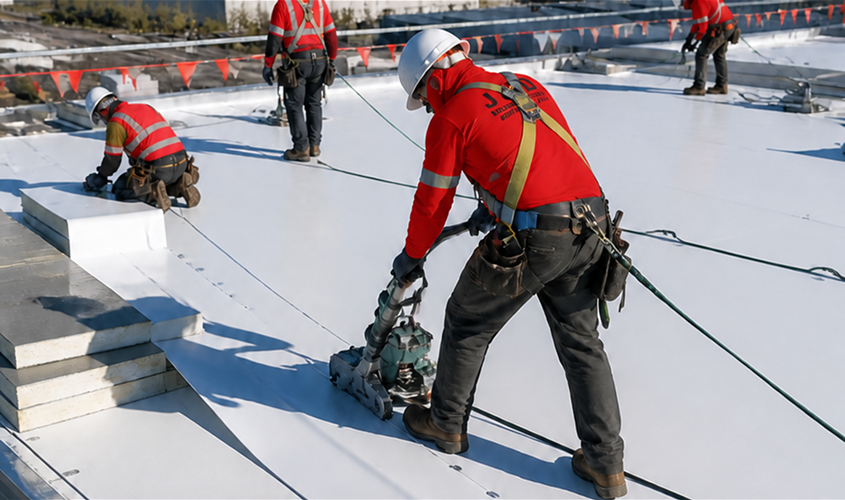
A full roof replacement on an active industrial facility presents logistical challenges. Shutting down production for weeks is rarely feasible. J & D Independent Roofing executes phased replacement strategies that work around your operational schedule. Our approach to minimising disruption includes:
- Dividing the roof into manageable zones and relocating inventory or covering sensitive equipment within the building beneath the active work area.
- Scheduling night shifts and weekend installations to accommodate continuous manufacturing cycles.
- Maintaining stringent housekeeping to prevent fasteners or membrane offcuts from entering production areas or storm drains.
- Providing advance notification of noisy operations such as deck fastening or membrane welding.
Post-installation, we provide as-built drawings, material data sheets, and a maintenance schedule tailored to your roof assembly. Regular semi-annual inspections and prompt attention to minor membrane damage will ensure that your new roof delivers thirty years or more of reliable service.
Conclusion
The industrial roof is a first-line defender against moisture ingress, thermal degradation, and structural overload. Deferring replacement of an aging, saturated, or mechanically unstable assembly places your entire operation at risk. By investing in professional roof replacement edmonton from J & D Independent Roofing, you secure your building envelope, reduce energy expenditures, and eliminate the liabilities associated with hidden decay. Do not wait for a leak to shut down your production line. Contact us today to schedule a comprehensive roof assessment and receive a detailed replacement proposal engineered for Edmonton’s industrial demands.