7 Warning Signs Your Flat Roof Is Trapping Moisture Beneath The Membrane
July 2, 2026
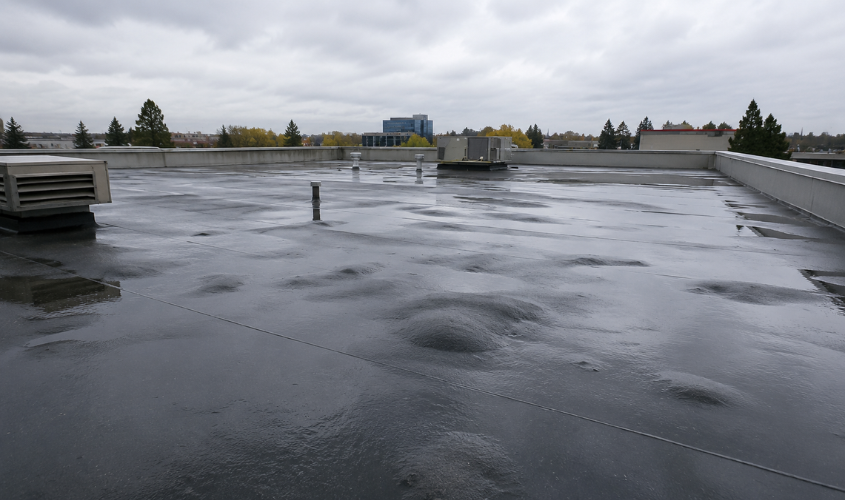
Flat roofs rarely fail overnight. In many cases, moisture begins building beneath the membrane long before visible leaks appear inside the building. Edmonton property owners often notice small changes first. A soft section near a drain. Bubbling around seams. A ceiling stain that seems to appear without explanation.
Over time, trapped moisture can affect insulation, weaken roofing materials, and shorten the life of the system. That is why early inspection matters. Many commercial and low-slope residential roofs in Alberta deal with repeated freeze-thaw cycles, snow buildup, and seasonal temperature swings that place constant stress on roofing assemblies.
Professional flat roofing services in Edmonton often identify hidden moisture before it spreads into larger structural issues.
Why Moisture Gets Trapped Beneath Flat Roofing Membranes
Flat roofing systems are designed to move water efficiently, but moisture can still become trapped beneath the surface over time. Small punctures, seam separation, aging membranes, rooftop penetrations, and drainage issues all create opportunities for water intrusion.
In Edmonton, weather conditions often make the problem worse. Snow accumulation followed by rapid warming can push moisture deeper into roofing layers. Once water enters the assembly, it may remain trapped beneath the membrane for long periods.
The Government of Canada recognizes moisture management as a critical part of long-term building durability through National Research Council Canada building science resources.
Soft Or Spongy Areas Under Foot
One of the earliest warning signs is a roof surface that feels softer than normal during inspection. Certain sections may slightly compress under foot traffic instead of feeling firm and stable.
This often happens when insulation beneath the membrane becomes saturated with moisture. Wet insulation loses structural rigidity over time. The roof may still appear normal visually, but movement underneath tells a different story.
Experienced roofing crews usually notice these subtle changes quickly during commercial inspections.
Bubbling Or Blistering Across The Membrane
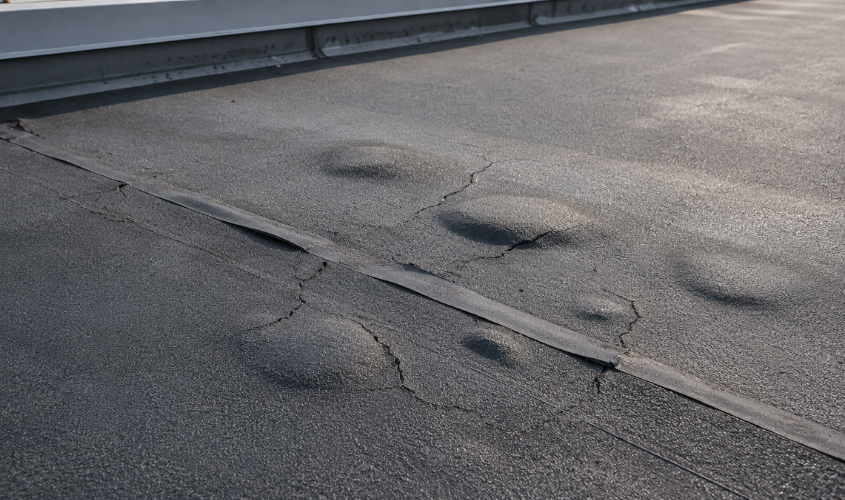
Blisters are another common sign of trapped moisture. They often appear as raised pockets beneath the roofing membrane.
As temperatures rise, trapped moisture creates vapour pressure beneath the surface. Over time, the membrane begins lifting slightly in isolated sections. Some blisters remain stable for years, while others continue expanding and weaken the surrounding seams.
This problem becomes more noticeable during warmer weather after long freeze-thaw periods.
Interior Ceiling Stains That Do Not Match The Leak Location
Many property owners assume a ceiling stain appears directly below the roof problem. Flat roofs rarely behave that way.
Water often travels horizontally beneath roofing materials before entering the building interior. A leak appearing in one office or hallway may originate several metres away near rooftop equipment, flashing, or drainage areas.
This is one reason professional moisture inspections matter. Surface observations alone do not always reveal the true entry point.
The Government of Alberta highlights moisture-related building concerns within Alberta building safety guidance.
Rising Energy Costs During Edmonton Winters
Wet insulation cannot perform properly. Once moisture becomes trapped beneath the membrane, thermal resistance drops significantly.
Many Edmonton property owners first notice the issue through inconsistent indoor temperatures or unusually high heating costs during winter. HVAC systems work harder because saturated insulation allows more heat transfer through the roofing assembly.
In commercial buildings, these gradual performance losses often continue unnoticed until roofing inspections uncover the source.
Ponding Water That Keeps Returning
Flat roofs are designed to manage water flow efficiently, but repeated ponding in the same areas usually signals a developing problem.
Low spots may slowly deepen as moisture affects insulation beneath the membrane. Over time, trapped water creates additional stress on seams, flashings, and drainage points.
Standing water also accelerates membrane aging. During colder months, freeze-thaw expansion places even more pressure on vulnerable sections of the roof.
Professional commercial roofing contractors often monitor recurring ponding areas closely during maintenance inspections.
Damp Odours Inside The Building
Trapped roof moisture sometimes becomes noticeable indoors before visible damage appears. Property owners may detect a persistent damp smell near upper floors, storage areas, or rooftop mechanical spaces.
This does not always mean severe damage exists. However, it often indicates moisture is affecting roofing materials or insulation layers somewhere within the assembly.
In larger buildings, these signs may appear gradually and become more noticeable during humid weather or seasonal temperature shifts.
Wrinkled Seams Or Surface Separation
Flat roofing membranes naturally expand and contract throughout Alberta’s seasonal temperature cycles. When moisture becomes trapped beneath the surface, that movement becomes more aggressive.
Seams may begin wrinkling slightly around rooftop penetrations or drainage transitions. Adhesives weaken over time. Surface movement becomes more visible near flashing details and equipment curbs.
These subtle changes are often early indicators that moisture has been affecting the roofing assembly longer than expected.
The Government of Canada discusses building envelope durability through Canadian building envelope and roofing research.
Why Hidden Roof Moisture Becomes More Expensive Over Time
Small moisture problems rarely stay isolated for long. Water trapped beneath a membrane can gradually affect surrounding insulation, seams, fasteners, and decking materials.
What begins as a localized repair sometimes develops into partial roof replacement if the issue remains undetected for too long.
Commercial buildings also face operational concerns. Moisture-related roofing failures can disrupt tenants, inventory storage, office operations, and temperature-sensitive equipment.
Early inspection usually gives property owners more repair options before widespread replacement becomes necessary.
How Professional Roof Inspections Detect Hidden Moisture
Modern roofing inspections often involve more than visual checks alone. Professional roofing contractors may use infrared scanning, moisture testing, drainage analysis, and seam inspections to identify hidden problems.
In some situations, core samples help confirm how far moisture has spread beneath the membrane.
Experienced inspectors also understand how Edmonton weather patterns affect flat roofing systems differently throughout the year. Seasonal expansion, ice buildup, and freeze-thaw movement all leave visible patterns that trained crews recognize quickly.
Conclusion
Flat roofs often show subtle warning signs before major leaks develop. Soft spots, bubbling membranes, recurring ponding water, and rising energy costs can all point toward trapped moisture beneath the surface.
In Edmonton, changing weather conditions place constant stress on flat roofing systems throughout the year. Identifying moisture problems early helps reduce long-term repair costs and protects the overall performance of the roof assembly.
Professional inspections remain one of the most effective ways to identify hidden moisture before larger roofing failures occur.
About J & D Independent Roofing
J & D Independent Roofing provides commercial, industrial, and flat residential roofing services across Edmonton and surrounding Alberta communities. The company works on office buildings, retail properties, industrial facilities, warehouses, and low-slope residential roofing systems using proven flat roofing materials and installation methods.
Our team understands how Alberta weather affects roofing performance over time, especially on flat and low slope systems exposed to freeze-thaw cycles, ponding water, and seasonal movement.
Property owners looking for experienced J & D Independent Roofing professionals can also reach the company directly.